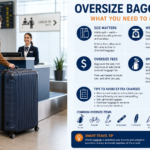

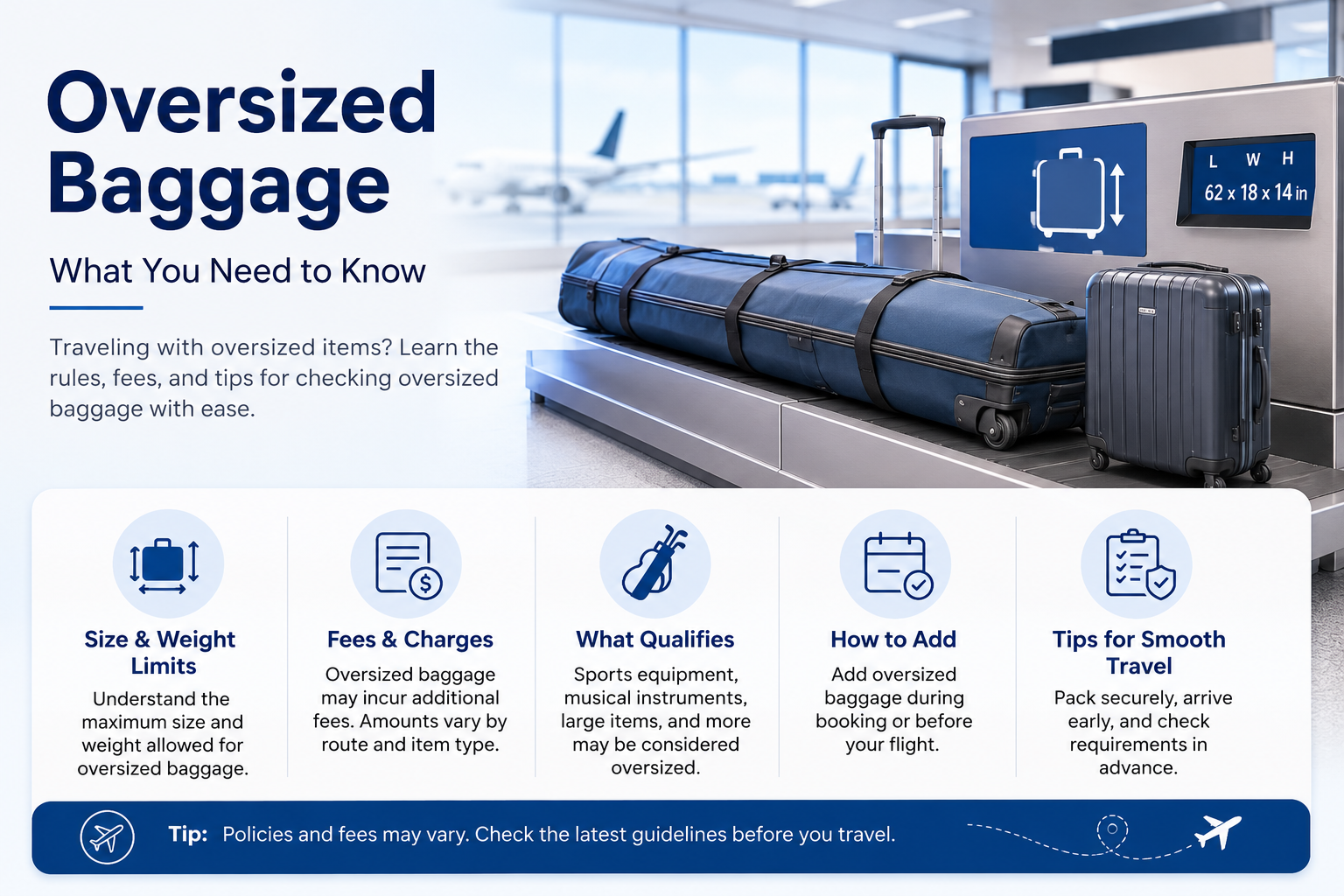
Traveling with large luggage can create uncertainty, especially when your suitcase, sports equipment, musical instrument, or special item exceeds standard baggage limits. Understanding the rules before reaching the airport can help you avoid unexpected charges and delays. Alaska Airline Oversized Baggage guidelines explain how travelers can prepare oversized items, understand applicable fees, and ensure their belongings are accepted for transportation.
Many passengers assume that a larger suitcase will automatically be accepted as a normal checked bag. However, airlines measure baggage differently using total dimensions, also known as linear inches, which combine the length, width, and height of an item.
In this guide, you will learn:
- What qualifies as oversized baggage on Alaska Airlines
- Maximum size and weight restrictions
- Oversized baggage fees and possible exceptions
- How to prepare large luggage before your flight
- Rules for sports equipment and special items
- Common mistakes travelers should avoid
- Answers to frequently asked oversized baggage questions
Whether you are moving with large boxes, traveling with sports equipment, or carrying specialty items, understanding baggage requirements can make your airport experience smoother.
What Is Considered Oversized Baggage on Alaska Airlines?
Oversized baggage refers to checked luggage that exceeds the airline’s standard size allowance. Airlines calculate baggage size by adding the three dimensions:
Length + Width + Height = Total Linear Dimensions
For example:
- Length: 32 inches
- Width: 20 inches
- Height: 18 inches
Total size:
32 + 20 + 18 = 70 linear inches
If a bag exceeds the permitted checked baggage size limit, it may be classified as oversized and additional fees may apply.
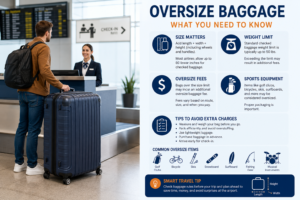
Oversized baggage commonly includes:
- Large suitcases
- Sporting equipment
- Musical instruments
- Bicycles
- Surfboards
- Large boxes
- Outdoor equipment
- Professional gear
Before traveling, passengers should measure their items carefully because luggage dimensions listed by manufacturers may not include wheels, handles, or external pockets.
Alaska Airlines Oversized Baggage Size and Weight Limits
Understanding size and weight restrictions is one of the most important steps before bringing oversized luggage to the airport.
Alaska Airlines generally separates baggage requirements into two categories:
| Baggage Category | Measurement Type | Common Examples |
|---|---|---|
| Standard Checked Bag | Regular dimensions and weight limits | Suitcases, travel bags |
| Oversized Baggage | Exceeds standard size allowance | Large equipment, oversized cases |
Most airlines use linear measurement standards because a bag can be longer but narrower, or shorter but wider. The total combined measurement determines whether it qualifies as oversized.
Passengers should also remember that oversized baggage and overweight baggage are separate categories.
A bag can be:
- Oversized but within weight limits
- Overweight but within size limits
- Both oversized and overweight
Each situation may involve different charges.
How to Measure Alaska Airline Oversized Baggage Correctly
Many travelers receive unexpected baggage fees because they measure their luggage incorrectly.
Follow these steps:
Step 1: Measure the Length
Place the suitcase on a flat surface and measure the longest side from one end to the other.
Include:
- Wheels
- Handles
- External attachments
Step 2: Measure the Width
Measure the widest side of the luggage, including pockets or expanded sections.
Step 3: Measure the Height
Measure from the bottom of the bag to the highest point.
Step 4: Add All Measurements
Use this formula:
Length + Width + Height = Total Linear Inches
Example:
A suitcase measuring:
- 34 inches long
- 22 inches wide
- 16 inches high
Total:
34 + 22 + 16 = 72 linear inches
This measurement helps determine whether additional oversized baggage charges may apply.
Why Travelers Need to Understand Oversized Baggage Rules
Oversized baggage rules exist because large items require additional handling, storage space, and airport processing.
Airlines consider several factors:
- Aircraft cargo capacity
- Loading procedures
- Safety requirements
- Airport equipment limitations
- Baggage handling resources
Industry reports from organizations such as the International Air Transport Association (IATA) show that baggage handling remains a major focus area for airlines because efficient luggage processing directly impacts passenger experience.
For travelers, knowing the rules in advance provides several benefits:
- Avoid surprise fees
- Reduce airport stress
- Prevent baggage rejection
- Improve packing decisions
- Save time during check-in
Alaska Airlines Oversized Baggage Fees Explained
One of the biggest concerns travelers have when carrying large luggage is the cost. Oversized baggage fees can vary depending on the route, ticket type, frequent flyer benefits, and the specific item being transported.
Alaska Airlines applies additional charges when checked baggage exceeds standard size limits. These charges are separate from normal checked bag fees and may be added during airport check-in.
Before traveling, passengers should consider:
- The total dimensions of the bag
- The weight of the item
- The destination and flight route
- Whether the item qualifies as special baggage
- Whether any exemptions apply
Factors That Influence Oversized Baggage Charges
Oversized baggage costs are usually determined by:
1. Size of the Item
A slightly oversized suitcase may have different handling requirements compared with extremely large equipment.
2. Weight of the Bag
Oversized and overweight charges may apply together if the item exceeds both limits.
3. Type of Item
Some special items may follow separate rules, including:
- Golf equipment
- Bicycles
- Surfboards
- Musical instruments
- Mobility equipment
4. Route Restrictions
Domestic and international flights may have different baggage rules because aircraft types, airport facilities, and international regulations can vary.
Travelers should always confirm current baggage fees directly with Alaska Airlines before departure because airline policies and charges can change.
Alaska Airlines Oversized Baggage Rules for Sports Equipment
Many travelers search for oversized baggage information because they need to transport sports gear. Sports equipment often requires special preparation because these items are larger, heavier, and more fragile than normal luggage.
Common oversized sports items include:
- Bicycles
- Surfboards
- Snowboards
- Skis
- Golf clubs
- Fishing equipment
Tips for Traveling With Sports Equipment
Follow these preparation steps:
- Use a protective travel case
Hard-shell cases provide better protection against damage during baggage handling.
- Remove loose parts
Detach removable accessories and pack smaller components securely.
- Label everything clearly
Include:
- Your name
- Contact information
- Flight details
- Arrive early
Oversized items often require additional processing at the airport baggage counter.
- Check special requirements
Some sports equipment may have specific packaging requirements.
Common Sports Equipment Mistakes
Travelers often face problems because they:
- Bring equipment without proper packaging
- Assume sports items are treated like regular luggage
- Forget weight restrictions
- Arrive too late for oversized baggage processing
Preparing equipment correctly reduces the chance of delays or additional handling issues.
Alaska Airlines Oversized Baggage Check-In Process
Checking oversized baggage is different from dropping off a standard suitcase.
Passengers should follow this process:
Step 1: Confirm Requirements Before Departure
Check:
- Allowed dimensions
- Weight restrictions
- Applicable fees
- Special item requirements
Step 2: Measure and Prepare the Item
Measure your baggage at home and secure all loose parts.
Step 3: Arrive Early at the Airport
Oversized baggage may take longer because staff need to:
- Inspect the item
- Verify measurements
- Apply baggage tags
- Send it through special handling areas
Step 4: Pay Applicable Fees
If your item requires an additional charge, payment may be completed during the check-in process.
Step 5: Collect Oversized Baggage at Arrival
Oversized items may not appear on the standard baggage carousel. Some airports use a separate oversized baggage pickup area.
How to Avoid Alaska Airlines Oversized Baggage Fees
While some oversized items cannot avoid additional charges, travelers can reduce unnecessary costs with proper planning.
Choose the Right Luggage
Large suitcases are not always better. A lightweight suitcase with efficient packing space can help stay within limits.
Check Measurements Before Buying Bags
Many luggage manufacturers advertise suitcase capacity but do not clearly explain airline dimension compatibility.
Before purchasing:
- Check length
- Check width
- Check height
- Include wheels and handles
Use Compression Packing Methods
Packing cubes and compression bags can help maximize available space without increasing luggage size.
Consider Shipping Large Items
For extremely large items, shipping services may sometimes be more affordable than airline oversized baggage fees.
Compare:
- Shipping cost
- Convenience
- Delivery timing
- Insurance options
Review Airline Benefits
Some passengers may receive baggage benefits through:
- Elite status
- Travel memberships
- Eligible credit cards
- Specific ticket benefits
Always verify eligibility before assuming a fee waiver applies.
Alaska Airlines Oversized Baggage vs Standard Checked Baggage
Understanding the difference between normal checked luggage and oversized baggage helps travelers plan better.
| Feature | Standard Checked Baggage | Oversized Baggage |
|---|---|---|
| Size | Within airline limits | Exceeds standard dimensions |
| Handling | Normal baggage process | Special handling may apply |
| Fees | Standard baggage charges | Additional oversized charges may apply |
| Examples | Suitcases, travel bags | Large equipment, specialty items |
| Preparation | Basic packing | Additional protection recommended |
The main difference is not only the physical size but also the extra handling required during transportation.
Alaska Airlines Oversized Baggage for International Flights
International travelers should pay extra attention because baggage rules can vary based on destination, aircraft type, and international agreements.
Before an international trip, passengers should check:
- Destination-specific restrictions
- Connection airport requirements
- Customs regulations
- Weight limitations
- Special item policies
International flights may involve multiple airlines through codeshare agreements. If another airline operates part of the journey, its baggage rules may apply.
International Oversized Baggage Preparation Tips
- Confirm baggage rules for every flight segment
- Keep receipts for baggage payments
- Protect fragile items properly
- Allow extra airport time
- Check customs requirements for unusual items
Common Mistakes Travelers Make With Oversized Baggage
Avoiding simple mistakes can prevent delays and unexpected costs.
Mistake 1: Measuring Only the Main Bag Body
Many travelers forget:
- Wheels
- Handles
- Side pockets
These can increase the total dimensions.
Mistake 2: Assuming Oversized Means Overweight
Size and weight are separate measurements.
A large lightweight item may be oversized but not overweight.
Mistake 3: Waiting Until Airport Arrival
Finding out about oversized baggage rules at the airport can create unnecessary stress.
Research requirements before leaving home.
Mistake 4: Poor Packaging
Large items are more exposed to damage. Proper protection is essential.
Mistake 5: Ignoring Connection Flight Rules
A bag accepted on one airline may have restrictions on another airline.
Always check the complete itinerary.
Expert Tips for Managing Large Luggage Successfully
Experienced travelers recommend following these strategies:
Plan Before Booking
If you know you need oversized baggage, consider baggage requirements while choosing your flight.
Take Photos Before Check-In
Photograph your luggage before handing it over. This can help document its condition.
Use Durable Identification Tags
Large bags are easier to identify when they have:
- Bright tags
- Unique covers
- Clear contact information
Keep Essential Items in Carry-On Bags
Never place important items such as:
- Travel documents
- Medication
- Valuables
inside oversized checked baggage.
Arrive Earlier Than Normal
Oversized baggage often requires extra processing time compared with regular luggage.
The Future of Airline Baggage Handling
Airlines are increasingly investing in improved baggage tracking technology and automated handling systems.
According to industry research from IATA, baggage technology improvements have helped reduce mishandled baggage rates globally by improving tracking accuracy and operational efficiency.
Modern baggage systems focus on:
- Digital baggage tracking
- Automated sorting
- Better passenger notifications
- Improved handling processes
For travelers, these improvements mean better visibility and fewer uncertainties when transporting large items.
Conclusion
Understanding Alaska Airline Oversized Baggage rules before your trip can help you avoid unexpected fees, delays, and airport problems. Oversized luggage requires more planning because airlines consider both dimensions and weight when determining acceptance and charges.
Before flying, measure your baggage carefully, review current airline requirements, prepare special items properly, and allow extra time during check-in. Whether you are carrying sports equipment, large suitcases, or specialty items, preparation is the easiest way to ensure a smoother travel experience.
By following the right steps, travelers can confidently manage oversized baggage while keeping their journey organized and stress-free.
Frequently Asked Questions
1. What is considered oversized baggage on Alaska Airlines?
Oversized baggage refers to checked luggage that exceeds the airline’s standard size allowance. Airlines generally calculate oversized luggage using total linear dimensions, which means adding the length, width, and height of the bag together.
2. How do I calculate oversized baggage dimensions?
Measure the longest side, the widest side, and the highest side of your luggage. Add these three measurements together to calculate the total linear dimensions of your bag.
Formula:
Length + Width + Height = Total Linear Dimensions
3. Does Alaska Airlines charge extra for oversized baggage?
Yes, additional charges may apply when checked baggage exceeds standard size limits. Fees depend on factors such as route, item type, and current airline baggage policies.
4. Can I bring sports equipment as oversized baggage on Alaska Airlines?
Yes, Alaska Airlines accepts many types of sports equipment, but some items may have specific packing requirements and separate handling procedures.
5. Can I check oversized baggage online?
Some baggage services may be available online, but oversized items typically require additional processing at the airport baggage counter.
6. How early should I arrive with oversized baggage?
Travelers carrying oversized luggage should arrive earlier than normal because large items may require inspection, special tagging, and additional handling.
7. Are oversized baggage fees different from overweight baggage fees?
Yes. Oversized baggage fees are based on dimensions, while overweight baggage fees are based on weight. A bag may qualify for one or both charges.
8. Can I bring a large suitcase instead of multiple smaller bags?
A large suitcase may be accepted if it meets airline size and weight limits. If it exceeds the allowed dimensions, it may be classified as oversized baggage.
9. Does Alaska Airlines accept bicycles and large equipment?
Many large specialty items, such as bicycles and sports equipment, may be accepted under special baggage rules. Travelers should review current requirements before flying.
10. What happens if my baggage is too large at the airport?
If your luggage exceeds the allowed limits, airline staff may apply additional charges, require special handling, or inform you that the item cannot be accepted.
11. How can I avoid oversized baggage charges?
You can reduce unexpected charges by measuring your luggage before traveling, choosing properly sized bags, packing efficiently, and checking baggage rules before departure.
12. Are oversized baggage rules different for international flights?
Yes. International routes may have different baggage requirements due to destination regulations, aircraft limitations, and partner airline policies.