
Planning your luggage before flying can save both time and money. Understanding the Allegiant Airline Extra Baggage policy helps travelers avoid unexpected airport fees, pack more efficiently, and enjoy a smoother travel experience. Since Allegiant follows an ultra-low-cost carrier model, baggage is not always included in the base fare. Instead, passengers choose and pay only for the baggage they need.
Whether you’re traveling for a weekend getaway, a family vacation, or a longer trip, knowing how extra baggage works can significantly reduce your travel expenses. Purchasing baggage in advance is usually more affordable than waiting until airport check-in, making early planning one of the easiest ways to save money.
In this guide, you’ll learn:
- How Allegiant Airline extra baggage works
- Checked baggage rules and limits
- Weight and size requirements
- Overweight and oversized baggage policies
- Steps to purchase additional baggage
- Tips for avoiding unnecessary baggage fees
- Rules for special items and sports equipment
- Frequently asked baggage questions
By the end of this guide, you’ll have a clear understanding of Allegiant’s baggage system and know exactly how to prepare for your next flight.
Understanding Allegiant Airline Extra Baggage
Allegiant Airline Extra Baggage refers to any checked luggage that a passenger purchases in addition to the basic travel fare. Because Allegiant uses an à la carte pricing model, travelers only pay for the services they need, including checked baggage, seat selection, and priority boarding.
Unlike some traditional airlines that include one or more checked bags with certain ticket types, Allegiant generally charges separately for every checked bag. This pricing structure allows travelers with minimal luggage to pay lower airfare while giving others the flexibility to customize their trip.
Extra baggage may include:
- One or more checked bags
- Additional checked luggage beyond the first bag
- Oversized baggage
- Overweight baggage
- Special sporting equipment
- Musical instruments
- Certain specialty travel items
Understanding these categories before booking can help travelers estimate their total travel costs more accurately.
Allegiant Airline Checked Baggage Allowance
Passengers can purchase checked baggage during booking, after making a reservation, or at the airport. However, buying baggage online before departure is generally the most economical option.
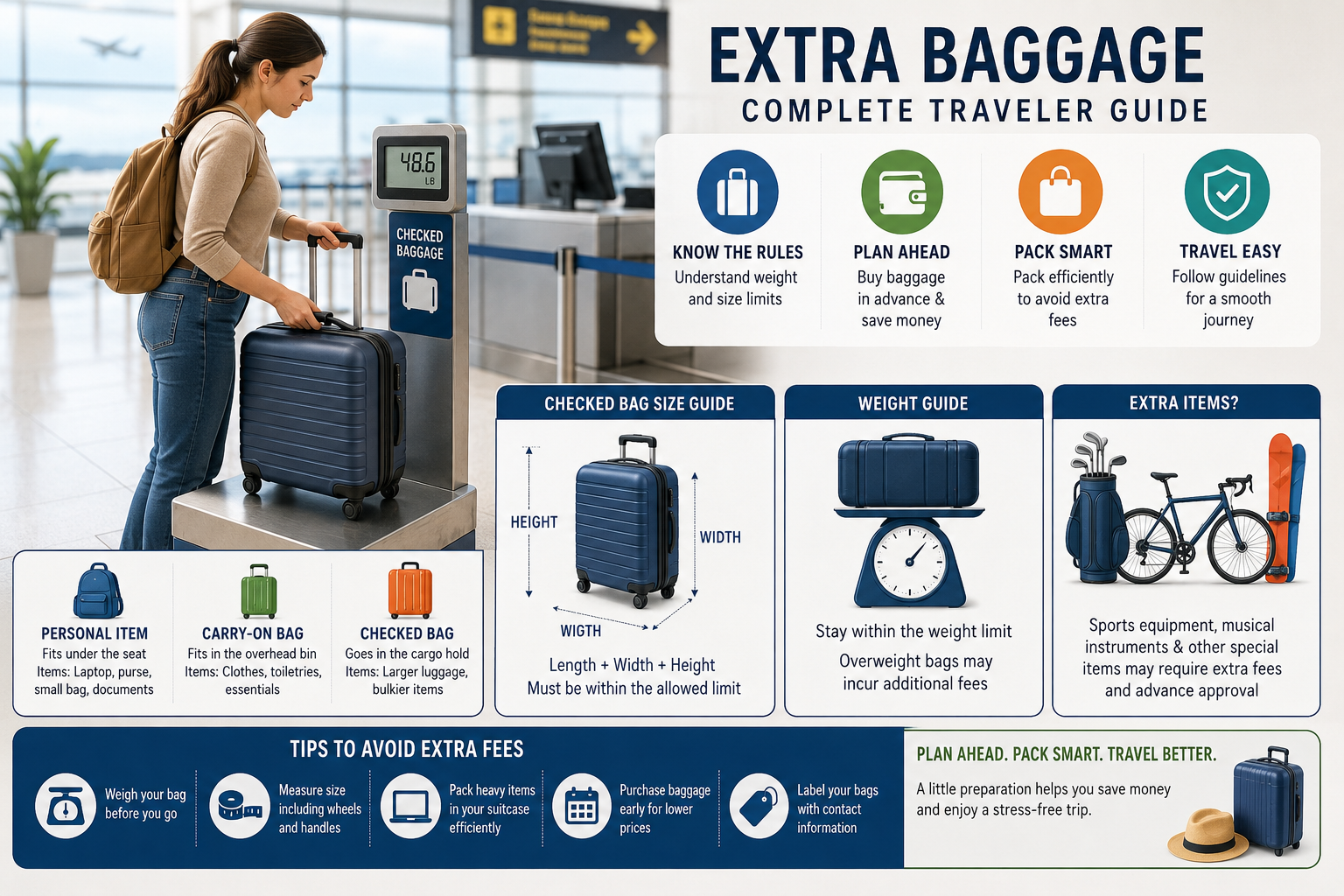
Standard checked baggage typically follows these requirements:
- Maximum weight limit per standard checked bag
- Standard size restrictions based on total linear dimensions
- Individual baggage fees for each checked bag
- Additional charges for overweight or oversized luggage
Travelers should always measure both the weight and dimensions of every suitcase before leaving home. Even a small difference in weight can result in additional airport charges.
Typical checked baggage includes items such as:
- Large suitcases
- Travel backpacks
- Duffel bags
- Storage trunks designed for airline travel
- Certain sports equipment packed within airline guidelines
For families, purchasing checked baggage in advance often simplifies airport check-in and reduces last-minute stress.
Why Purchasing Allegiant Airline Extra Baggage Before Your Flight Saves Money
One of the most common mistakes travelers make is waiting until they reach the airport to purchase baggage. Airline pricing models often reward early planning, meaning baggage purchased during booking or before departure generally costs less than baggage added at the airport.
Benefits of purchasing baggage early include:
- Lower baggage fees compared to airport pricing
- Faster airport check-in
- Reduced risk of unexpected travel expenses
- Better trip budgeting
- Easier online management of reservations
- More time to review baggage requirements before departure
For example, a family traveling with multiple suitcases can often reduce total baggage expenses simply by adding luggage during the online booking process instead of waiting until check-in.
Travel experts also recommend weighing each suitcase at home using a digital luggage scale. This simple step can help prevent overweight baggage fees and eliminate unnecessary repacking at the airport.
Beyond cost savings, early baggage planning allows travelers to organize their belongings more efficiently. Instead of rushing through packing the night before departure, passengers can decide which items belong in carry-on bags, checked baggage, or personal items while staying within airline limits. This preparation not only saves money but also contributes to a smoother and less stressful airport experience.
Allegiant Airline Extra Baggage Fees for Extra Checked Bags
One of the first questions travelers ask is, “How much does Allegiant charge for extra baggage?” The answer depends on several factors, including when you purchase your baggage, your route, and the number of checked bags you add to your reservation.
In general, baggage purchased during the initial booking process is less expensive than baggage added later through Manage Travel or at the airport. Airport purchases are typically the most expensive option.
Several factors influence baggage pricing:
- Time of purchase
- Flight route
- Seasonal demand
- Number of checked bags
- Whether the bag exceeds weight or size limits
Instead of assuming all baggage costs are the same, review your reservation before departure to see the applicable fee for your itinerary.
Example Scenario
Imagine you’re taking a five-day vacation.
You book your flight and realize later that a carry-on bag won’t be enough. By adding a checked bag through your reservation before departure, you generally pay less than if you waited until reaching the airport.
This simple planning step can help reduce overall travel expenses.
Allegiant Baggage Weight Limit
Understanding baggage weight restrictions is one of the easiest ways to avoid additional charges.
A standard checked bag must remain within the airline’s maximum weight allowance. Bags exceeding the permitted weight may be classified as overweight and become subject to additional fees.
Before leaving home:
- Weigh every suitcase using a luggage scale.
- Remove unnecessary items if the bag is close to the limit.
- Distribute heavier belongings between multiple bags when possible.
- Place bulky clothing in your personal item if space allows.
- Avoid packing items that can easily be purchased at your destination.
Common Items That Increase Bag Weight
Many travelers are surprised by how quickly luggage becomes heavy.
Examples include:
- Shoes
- Toiletries
- Jackets
- Books
- Electronics
- Souvenirs
- Sports gear
Packing strategically helps you remain within the allowed weight while keeping your belongings organized.
Allegiant Baggage Size Requirements
Weight isn’t the only factor that matters. Airlines also measure baggage dimensions.
Checked luggage must stay within the permitted linear dimensions, which combine the length, width, and height of the suitcase.
Before traveling:
- Measure the height.
- Measure the width.
- Measure the depth.
- Add the three measurements together.
- Compare the total with the airline’s published limit.
Hard-shell luggage can appear compact but may exceed the size restriction because of wheels and handles. Always include these when measuring your suitcase.
Standard Packing Tips
Choose luggage that matches the length of your trip.
For example:
| Trip Length | Recommended Bag |
|---|---|
| Weekend | Small suitcase |
| 3–5 days | Medium suitcase |
| One week | Large checked bag |
| Two weeks or more | Multiple checked bags |
Selecting the right luggage size reduces wasted space and helps prevent overweight baggage.
Overweight Baggage Policy
A bag that exceeds the standard weight allowance is considered overweight.
Overweight baggage usually results in an additional fee beyond the normal checked baggage charge.
To avoid these fees:
- Pack lighter clothing.
- Wear heavy shoes during travel.
- Split items between multiple suitcases.
- Ship heavy equipment separately if practical.
- Check baggage weight before leaving home.
Real-World Example
A traveler packing for a ski vacation places boots, jackets, helmets, and winter clothing into one suitcase.
At the airport, the bag exceeds the weight limit.
Instead of paying an overweight fee, the traveler could have divided those items into two standard-weight bags before leaving home.
Planning ahead makes a significant difference.
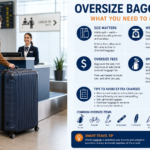
Oversized Baggage Rules
Oversized baggage refers to luggage that exceeds the airline’s maximum size limits.
Examples include:
- Extra-large suitcases
- Surfboards
- Certain bicycles
- Kayaks
- Large musical equipment
- Specialized sports gear
Oversized baggage often requires additional handling and may incur extra fees.
Whenever traveling with unusually large equipment:
- Review airline restrictions before booking.
- Confirm the item is accepted.
- Use protective cases.
- Arrive earlier than normal.
- Label equipment clearly.
Many travelers assume all sporting equipment follows identical rules, but requirements may vary depending on the item being transported.
Special Items and Sports Equipment
Many passengers travel with more than traditional luggage.
Common specialty baggage includes:
- Golf clubs
- Skis
- Snowboards
- Fishing equipment
- Hockey gear
- Archery equipment
- Musical instruments
- Camping gear
- Scuba equipment
- Baby equipment
Each item may have unique packing requirements.
Best Practices
- Use padded travel cases.
- Secure loose parts.
- Protect fragile equipment.
- Label all bags clearly.
- Remove prohibited items before arriving at the airport.
Travel insurance may also provide additional protection for expensive sporting equipment or musical instruments.
How to Add Allegiant Airline Extra Baggage After Booking
Many travelers don’t realize they can purchase additional baggage after completing their reservation.
The process is straightforward.
Step 1
Open your reservation using the airline’s online booking management system.
Step 2
Locate the baggage section.
Step 3
Select the number of checked bags you wish to add.
Step 4
Review the updated total cost.
Step 5
Complete payment.
Step 6
Save your updated confirmation.
Taking these steps before arriving at the airport often results in lower fees and a faster check-in experience.
Common Mistakes That Lead to Higher Baggage Costs
Experienced travelers often save money simply by avoiding a few common errors.
The most frequent mistakes include:
- Waiting until airport check-in to purchase baggage.
- Not weighing luggage before departure.
- Using oversized suitcases for short trips.
- Forgetting to measure baggage dimensions.
- Packing prohibited or unnecessary items.
- Bring duplicate clothing.
- Ignoring baggage restrictions for sports equipment.
- Assuming baggage is included with every ticket.
Avoiding these mistakes can make your journey smoother while helping you stay within your travel budget.
Expert Packing Tips to Reduce Extra Baggage Fees
Packing efficiently isn’t just about fitting everything into a suitcase—it’s about maximizing space while minimizing weight.
Professional travelers often use proven strategies that reduce the need for additional checked bags.
Some of the most effective techniques include:
- Roll clothes instead of folding them to save space.
- Use packing cubes to organize clothing and compress soft items.
- Wear your heaviest jacket or shoes during travel.
- Pack versatile clothing that can be mixed and matched.
- Limit toiletries to travel-sized containers.
- Leave room for souvenirs instead of overpacking.
- Share luggage with family members when practical.
- Place chargers and small electronics in your personal item to distribute weight.
Another helpful strategy is creating a packing checklist several days before departure. This allows you to review every item objectively and remove things you are unlikely to use.
Business travelers often follow the “one-week packing rule,” where they pack enough clothing for one week regardless of trip length and plan to do laundry during longer stays. This approach can eliminate the need for multiple checked bags.
For family vacations, coordinate packing across suitcases rather than assigning one bag per person. If one suitcase is delayed, everyone still has access to essential clothing and personal items distributed among the remaining bags. This method also helps balance luggage weight and reduces the likelihood of overweight baggage charges.
What to Do if Your Bag Exceeds the Allowed Limit
Even with careful planning, you may discover at the airport that your luggage exceeds the permitted weight or size. Knowing what to do can help you avoid unnecessary delays and reduce additional costs.
If your bag is overweight:
- Move heavier items into another suitcase if you have one.
- Transfer smaller items into your personal item or carry-on, provided they meet size requirements.
- Remove unnecessary items that can be purchased at your destination.
- Reweigh your luggage before checking it in.
- If adjustments aren’t possible, be prepared to pay the applicable overweight baggage fee.
If your luggage is oversized, speak with an airline representative before check-in. Some specialty items may require special handling or have different acceptance procedures.
Arriving at the airport a little earlier than usual gives you extra time to reorganize your luggage if needed.
Tips for Families Traveling with Extra Baggage
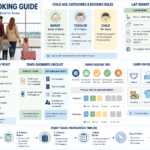
Families often travel with more luggage than solo passengers. Between clothing, baby supplies, toys, and personal items, baggage can add up quickly.
Here are several ways families can travel more efficiently:
- Share suitcases among family members.
- Pack bulky items like jackets separately if space allows.
- Label every suitcase with contact information.
- Keep medications and important documents in a personal item.
- Pack one extra change of clothes in your carry-on.
- Weigh each suitcase before leaving home.
- Review baggage rules for strollers, child safety seats, and baby equipment.
Planning together helps reduce stress and minimizes the chance of paying unexpected baggage fees.
Business Travelers and Frequent Flyers
Business travelers often need to pack laptops, presentation materials, and professional clothing. Efficient packing can make short work trips much easier.
Recommended practices include:
- Use wrinkle-resistant clothing.
- Carry valuable electronics in your personal item.
- Keep important business documents easily accessible.
- Choose lightweight luggage.
- Pack only what is necessary for your meetings.
Frequent travelers also benefit from maintaining a reusable packing checklist to avoid forgetting essentials or overpacking.
Comparing Personal Items, Carry-On Bags, and Checked Bags
Understanding the differences between baggage types helps you choose the most cost-effective option.
| Feature | Personal Item | Carry-On Bag | Checked Bag |
|---|---|---|---|
| Stored Under Seat | Yes | No | No |
| Stored in Overhead Bin | No | Yes | No |
| Travels in Cargo Hold | No | No | Yes |
| Best For | Small essentials | Short trips | Longer vacations |
| Typical Contents | Laptop, purse, backpack | Clothing and essentials | Larger luggage and bulky items |
Choosing the right combination of baggage depends on the length of your trip, destination, and packing needs.
Travel Checklist Before Flying
Before heading to the airport, review this simple checklist to avoid common baggage issues.
- Confirm your baggage purchase.
- Check baggage weight.
- Measure luggage dimensions.
- Print or save your boarding pass.
- Attach luggage tags.
- Keep valuables in your personal item.
- Remove prohibited items.
- Arrive at the airport early.
- Keep baggage receipts until your trip is complete.
- Double-check that all zippers and locks are secure.
Completing this checklist can help make your airport experience faster and less stressful.
Frequently Asked Questions
How much does Allegiant Airline charge for extra baggage?
The cost of extra baggage varies depending on your route, when you purchase the baggage, and how many checked bags you add. Buying baggage during booking or before your flight is generally less expensive than paying at the airport.
Can I add extra baggage after booking my flight?
Yes. You can usually add checked baggage through your reservation before departure. Purchasing baggage in advance is often the most economical option.
What is the weight limit for checked baggage?
Standard checked baggage must remain within the airline’s published weight limit. Bags exceeding the limit may be considered overweight and incur additional charges.
What happens if my luggage is overweight?
If your suitcase exceeds the allowed weight, you may need to pay an overweight baggage fee or redistribute items between bags before checking them.
Does Allegiant allow oversized baggage?
Yes. Oversized baggage may be accepted depending on the item, but additional fees and handling requirements often apply.
Can I travel with sports equipment?
Yes. Many types of sports equipment, including golf clubs, skis, fishing gear, and bicycles, can be transported when packed according to airline requirements.
Is it cheaper to buy baggage online?
In most cases, yes. Purchasing baggage before arriving at the airport generally costs less than buying it during check-in.
Can multiple checked bags be purchased?
Yes. Travelers can usually purchase more than one checked bag, subject to the airline’s baggage policies and applicable fees.
Are baggage fees refundable?
Baggage fees are generally subject to the airline’s fare rules and policies. Review the terms associated with your booking for details regarding refunds or changes.
How can I avoid paying extra baggage fees?
Pack efficiently, weigh your luggage before leaving home, measure your suitcase, and purchase any required checked bags before arriving at the airport.
Conclusion
Understanding the Allegiant Airline Extra Baggage policy before your trip can help you avoid unnecessary fees, pack more efficiently, and enjoy a smoother airport experience. By purchasing baggage in advance, staying within the airline’s published weight and size limits, and using smart packing strategies, you can significantly reduce travel costs and eliminate last-minute surprises. Whether you’re traveling for business, a family vacation, or a weekend getaway, planning your luggage ahead of time ensures a more organized journey. Before every flight, review the latest baggage requirements, confirm your purchased baggage allowance, and weigh your luggage at home so you can travel with confidence and focus on enjoying your destination rather than worrying about unexpected baggage charges.