
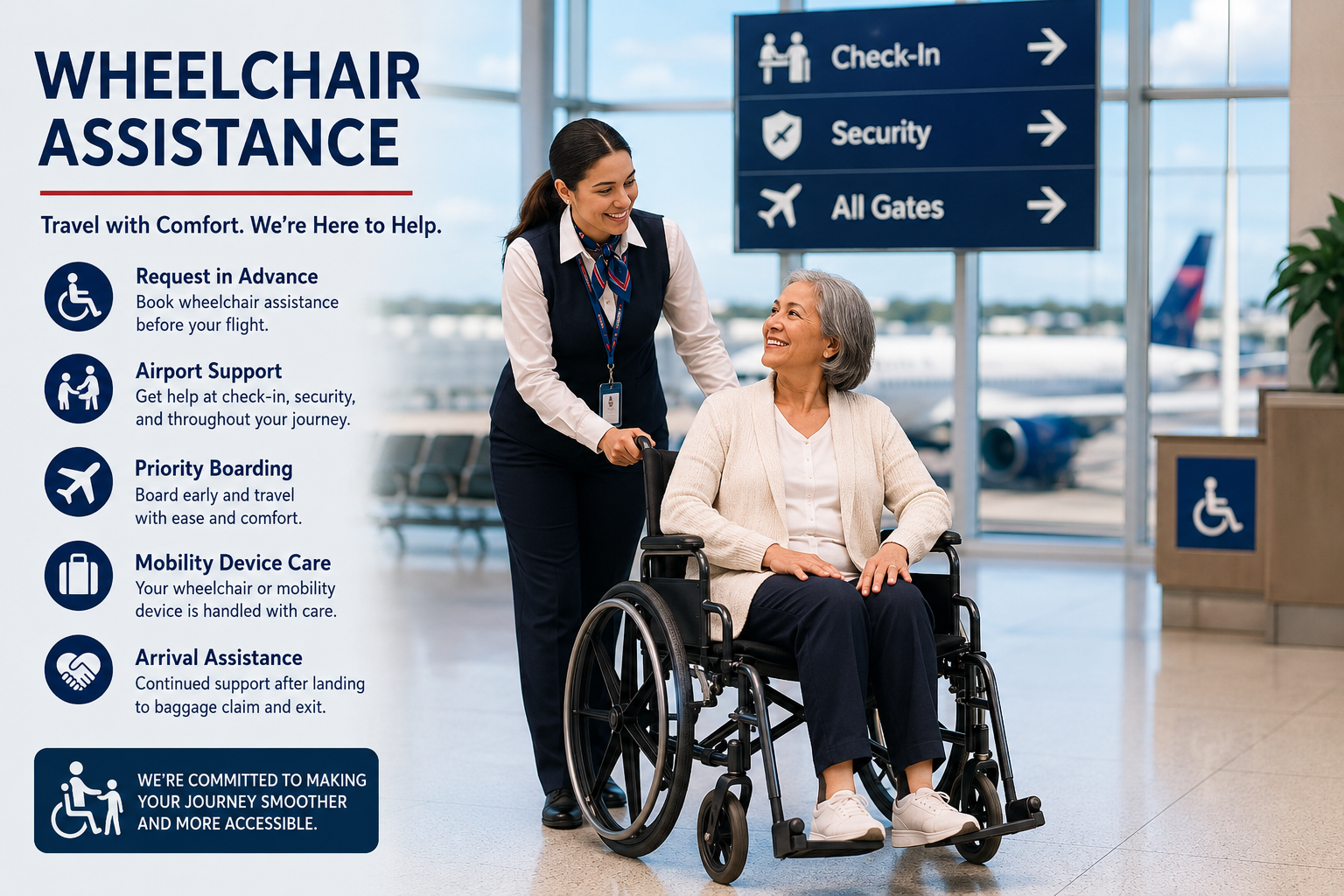
Travelling should be accessible for everyone, regardless of age or mobility level. Delta Airline Wheelchair Assistance is designed to help passengers who require mobility support before departure, during boarding, throughout connections, and after arrival. Whether you’re travelling with a temporary injury, a long-term disability, or an elderly family member, understanding how this service works can make your journey smoother and less stressful.
Delta offers several accessibility services to support passengers who need assistance moving through the airport or boarding the aircraft. These services are available on domestic and international flights and can usually be requested during booking or added later to an existing reservation.
Planning ahead is one of the most important steps for travellers who require mobility assistance. While Delta accepts requests at the airport, making arrangements in advance helps airport staff prepare appropriate equipment and ensures assistance is available when you arrive.
Travellers should also understand what services are included, what responsibilities remain with the passenger, and how mobility devices are handled during air travel.
Discover What’s Inside
By the end of this guide, you’ll understand:
- What Delta Airline Wheelchair Assistance includes
- Who can request mobility assistance
- How to request wheelchair service before your flight
- Types of wheelchair assistance available
- Airport check-in procedures
- Boarding and deplaning assistance
- Travelling with personal wheelchairs and mobility scooters
- Battery-powered wheelchair requirements
- Assistance during connecting flights
- Passenger rights under accessibility regulations
- Practical travel tips for a smoother journey
What Is Delta Airline Wheelchair Assistance?
Delta Airline Wheelchair Assistance is a complimentary accessibility service that helps passengers with limited mobility move safely through the airport and board or leave the aircraft. Assistance may include transportation between airport areas, boarding support, help during connections, and guidance after arrival.
The service is intended for travellers who cannot comfortably walk long distances or who need additional support navigating busy airport terminals. Assistance levels vary depending on individual mobility needs.
Common services include:
- Wheelchair transportation within the airport
- Escort assistance through check-in and security
- Help reaching departure gates
- Priority boarding support
- Assistance during aircraft boarding and deplaning
- Support during flight connections
- Arrival assistance to baggage claim or airport exit
Because every traveller’s needs are different, Delta allows passengers to request assistance based on the amount of mobility support required.
Who Can Request Delta Airline Wheelchair Assistance?
Wheelchair assistance is available to many types of travellers, not only passengers with permanent disabilities.
You may benefit from this service if you:
- Have limited mobility
- Are recovering from surgery
- Have a temporary injury such as a broken leg
- Experience chronic pain while walking
- Have arthritis or joint conditions
- Travel with an elderly family member
- Have neurological or muscular disorders
- Use a personal wheelchair or mobility scooter
- Require assistance navigating large airports
The service is available regardless of age and can be requested for adults, children, and senior citizens.
Passengers do not generally need to provide medical documentation for standard wheelchair assistance requests. However, specialised medical equipment or unique accessibility needs may require advance communication with the airline.
Types of Wheelchair Assistance Available
Not every traveller requires the same level of mobility support. Delta provides different assistance options depending on the passenger’s ability to walk independently.
A passenger who can walk long distances slowly
Some travellers simply need additional time or occasional assistance navigating large terminals. These passengers may request airport wheelchair transport for long walking distances while still boarding the aircraft independently.
Passenger Can Walk but cannot Climb Stairs
Passengers who can walk short distances but cannot manage stairs may receive assistance using airport boarding equipment where available.
Passenger Cannot Walk Long Distances
Travellers who cannot comfortably walk through airport terminals may receive wheelchair transportation from check-in to the departure gate and again after landing.
Passenger Requires Full Mobility Assistance
Passengers with significant mobility limitations may require continuous wheelchair support throughout their airport journey, including transfers between connecting flights and assistance reaching baggage claim after arrival.
Understanding which level of assistance best matches your needs helps airport staff prepare the appropriate support before your flight.
How to Request Delta Airline Wheelchair Assistance
Requesting wheelchair assistance before your journey is the easiest way to ensure airport staff are prepared to help you. While same-day requests are often accommodated, notifying the airline in advance reduces waiting times and improves the overall travel experience.
You can request wheelchair assistance when booking your ticket online by selecting the accessibility or special assistance option. If you have already purchased your ticket, you can usually add the request later by managing your booking or contacting customer support. Assistance can also be requested at the airport check-in counter, although availability may depend on staffing and passenger demand.
For the smoothest experience:
- Request assistance as early as possible.
- Confirm your request a few days before departure.
- Arrive at the airport earlier than the recommended check-in time.
- Inform the check-in agent about any mobility equipment you are travelling with.
- Keep your travel documents easily accessible.
Early planning helps airport teams coordinate assistance for departures, connections and arrivals.
What Happens at the Airport?
Knowing what to expect on the day of travel can reduce stress and make your journey more comfortable.
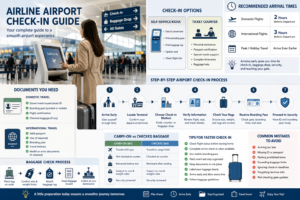
Check-In
When you arrive at the airport, inform the check-in representative that you requested wheelchair assistance. If you are travelling with your own wheelchair or mobility scooter, it will be inspected and tagged for transport if it needs to travel in the cargo hold.
Airport staff will explain the next steps and answer any questions regarding boarding or accessibility.
Security Screening
Passengers using wheelchairs receive security screening in accordance with airport security procedures. If you are unable to stand, screening can often be completed while you remain seated. Security officers are trained to assist passengers with disabilities while maintaining privacy and safety.
If you use medical equipment or assistive devices, notify the security officer before screening begins.
Travelling to the Departure Gate
After security, an airport assistant escorts you to your departure gate. If you have time before boarding, you may remain at nearby seating or accessible waiting areas until boarding begins.
Priority Boarding
Passengers requiring wheelchair assistance are generally invited to board before general boarding starts. Early boarding provides additional time to settle into your seat without feeling rushed.
Benefits of priority boarding include:
- Easier access to the aircraft.
- Extra time to store carry-on items.
- Reduced congestion in the aisle.
- A more comfortable boarding experience.
Boarding the Aircraft
Boarding procedures depend on the aircraft type and airport facilities.
Many airports use jet bridges that allow wheelchair users to board directly. If a narrow onboard aisle wheelchair is required, trained staff assist passengers safely from the airport wheelchair to their aircraft seat.
For airports without jet bridges, specialised lifting equipment may be used to help passengers board safely.
During boarding, staff can assist with:
- Transferring to an aisle wheelchair.
- Moving to your assigned seat.
- Storing mobility aids when permitted.
- Providing information about onboard accessibility features.
Passengers should remember that cabin crew are available to assist with onboard services but cannot provide personal medical care or lifting assistance during the flight.
Travelling with Your Own Wheelchair
Many passengers prefer travelling with their own mobility equipment. Delta accepts both manual wheelchairs and many powered mobility devices, provided they meet safety requirements.
If travelling with your own wheelchair:
- Label it with your name and contact information.
- Remove loose cushions or detachable accessories.
- Photograph the wheelchair before travel.
- Carry operating instructions if it is powered.
- Bring any specialised tools needed for assembly.
These simple steps help minimise the risk of delays or damage.
Manual Wheelchairs
Manual wheelchairs are commonly accepted and can often be checked free of charge. Depending on available cabin space and aircraft size, certain folding wheelchairs may be stored onboard.
Electric Wheelchairs and Mobility Scooters
Battery-powered mobility devices require additional handling because different battery types have different transport regulations.
Airport staff may ask for information such as:
- Battery type.
- Battery size.
- Whether the battery can be removed.
- Weight of the mobility device.
- Operating instructions for safely powering it off.
Providing this information in advance helps avoid delays during check-in.
Understanding Battery Requirements
Powered wheelchairs commonly use one of several battery types, each with specific transport guidelines.
| Battery Type | Usually Accepted | Additional Requirements |
|---|---|---|
| Dry Cell | Yes | Minimal restrictions |
| Gel Cell | Yes | Secure installation required |
| AGM Battery | Yes | Proper protection required |
| Lithium-Ion | Yes | Subject to size and safety limits |
| Spillable Wet Battery | Depends | May require special handling |
Before travelling, confirm that your mobility device complies with current airline safety requirements.
Delta Airline Wheelchair Assistance During Connecting Flights
Large airports can involve long walking distances between terminals. Delta’s wheelchair assistance is especially valuable for passengers with connecting flights.
When your wheelchair request is linked to your reservation, airport staff generally assist you throughout the connection.
Connection assistance may include:
- Escort from one arrival gate to the next departure gate.
- Transportation between terminals.
- Assistance with elevators and airport trains.
- Help in reaching accessible restrooms.
- Guidance to restaurants or waiting areas if time permits.
If your layover is short, airport staff often prioritise timely transfers to help you reach your next flight.
Arrival Assistance After Landing
Wheelchair assistance does not end when the aircraft lands.
After arrival, airport staff can assist passengers by:
- Helping them leave the aircraft.
- Escorting them through the terminal.
- Assisting with baggage claim.
- Guiding them through customs and immigration on international journeys.
- Escorting them to airport transportation, parking or the terminal exit.
Passengers travelling with checked mobility equipment usually receive their wheelchairs shortly after landing, depending on airport procedures.
If your personal wheelchair is delivered at the aircraft door, airport staff will assist you with the transfer before leaving the aircraft.
Passenger Rights Under Accessibility Regulations
Passengers with disabilities are protected by accessibility laws that prohibit discrimination and require airlines to provide reasonable assistance.
These protections generally include:
- Equal access to air travel.
- Complimentary wheelchair assistance.
- Safe transport of mobility devices.
- Accessible boarding procedures.
- Assistance during connections.
- Accommodation for qualified service animals where applicable.
Understanding your rights helps ensure you receive appropriate assistance throughout your journey.
Tips for a Smooth Travel Experience
Experienced travellers recommend preparing well before departure to avoid unnecessary stress.
Helpful travel tips include:
- Request wheelchair assistance immediately after booking.
- Reconfirm the request before your travel date.
- Arrive at least two to three hours before departure for domestic flights and even earlier for international travel.
- Keep medications in your carry-on bag.
- Carry copies of important medical information.
- Label all mobility equipment clearly.
- Remove fragile accessories before checking mobility devices.
- Bring portable chargers for medical equipment if needed.
- Inform airport staff of any special requirements.
- Stay hydrated and allow extra time during connections.
Common Mistakes to Avoid
Even experienced travellers occasionally overlook important details that can affect their journey.
Avoid these common mistakes:
- Waiting until arrival at the airport to request assistance.
- Forgetting to confirm accessibility requests after changing flights.
- Failing to label mobility equipment.
- Not checking battery requirements for powered wheelchairs.
- Arriving too close to departure time.
- Packing essential medications in checked baggage.
- Assuming every airport follows identical accessibility procedures.
- Forgetting to notify staff about connecting flight assistance.
By planning ahead and communicating your needs clearly, you can enjoy a smoother and more comfortable travel experience from check-in to arrival.
Frequently Asked Questions
Is Delta Airline Wheelchair Assistance free?
Yes. Delta Airline Wheelchair Assistance is provided at no additional cost for passengers who require mobility support. The service includes assistance through the airport, boarding, connections, and arrival.
How do I request Delta Airline Wheelchair Assistance?
You can request wheelchair assistance while booking your flight, after booking by managing your reservation, through customer support, or at the airport check-in counter. Requesting assistance in advance is recommended to ensure availability.
Can I request wheelchair assistance after purchasing my ticket?
Yes. If you forgot to request assistance during booking, you can usually add it to your reservation before your travel date or inform airport staff when you arrive.
How early should I arrive at the airport?
Passengers using wheelchair assistance should arrive at least two hours before domestic flights and three hours before international departures. Extra time allows for check-in, security screening, and boarding assistance.
Does Delta help elderly passengers?
Yes. Elderly passengers who have difficulty walking long distances can request wheelchair assistance, making it easier to move through large airport terminals.
Can I travel with my own wheelchair?
Yes. Manual wheelchairs and many powered wheelchairs are accepted for transport. Depending on aircraft size and available cabin storage, some manual wheelchairs may be stored onboard, while others are transported in the cargo compartment.
Are electric wheelchairs allowed?
Yes. Electric wheelchairs and mobility scooters are generally accepted, provided they comply with airline safety regulations regarding battery type, size, and secure transport.
Will someone assist me during a connecting flight?
Yes. If wheelchair assistance is included in your reservation, airport staff can escort you between connecting flights and assist with transfers between terminals.
Can I receive assistance after landing?
Yes. Assistance continues after arrival and may include help leaving the aircraft, travelling through the terminal, collecting checked baggage, clearing customs on international flights, and reaching the airport exit or ground transportation.
What happens if my wheelchair is damaged?
If your mobility device is damaged during transport, report the issue immediately before leaving the airport. Airport staff will document the damage and begin the claims process according to airline procedures.
Can I travel alone if I use a wheelchair?
Many passengers who use wheelchairs travel independently every day. Airport assistance helps with navigation, boarding, and arrival, allowing travellers to complete their journey with greater confidence.
Can family members accompany me?
In many situations, family members or travelling companions may remain with you throughout much of the airport process, although security and boarding procedures vary by airport.
What accessibility services are available besides wheelchair assistance?
Additional accessibility services may include priority boarding, assistance for visually or hearing-impaired passengers, accessible seating options, accommodation for qualified service animals, and support for travellers using medical equipment.
Conclusion
Travelling with limited mobility does not have to be complicated when you understand how Delta Airline Wheelchair Assistance works. By requesting assistance early, arriving at the airport with enough time, and communicating your mobility needs clearly, you can enjoy a smoother travel experience from departure to arrival.
Whether you are travelling with a temporary injury, a permanent disability, or assisting an elderly family member, Delta’s accessibility services are designed to improve comfort, safety, and convenience throughout your journey. Preparing ahead, understanding wheelchair transport policies, and knowing your passenger rights will help you travel with greater confidence and peace of mind.